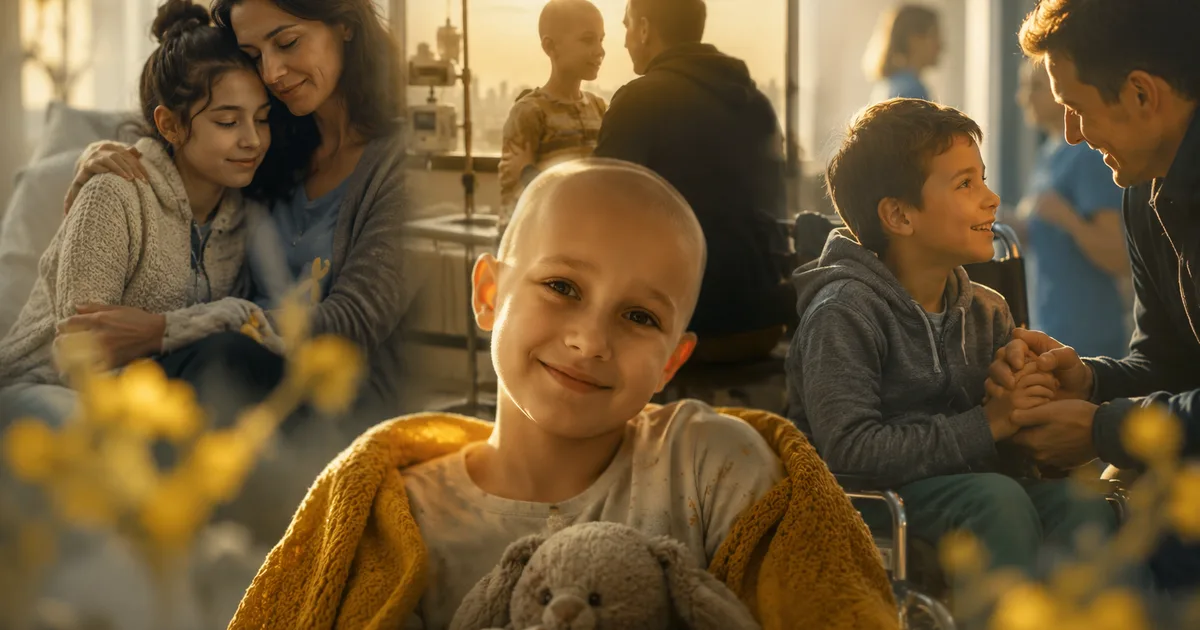
Different Diagnoses. Different Journeys. One Thing Every Family Deserves: Hope.
Every year, thousands of families hear words they never expected to hear:
"Your child has a brain tumor."
And in that moment, life changes forever.
Not just for the child — for parents, siblings, grandparents, and everyone who loves them.
Many people don't realize that pediatric brain tumors are not one single disease. There are many different types, and every diagnosis can come with its own challenges, treatments, fears, and unknowns. Some tumors grow slowly. Others are aggressive. Some respond well to surgery. Others still desperately need more research, funding, and treatment options.
But behind every diagnosis is something much bigger than a medical term.
There is a child who still wants to laugh. A parent trying to stay strong in a hospital hallway. A sibling missing home. A family learning how to survive one day at a time.
During Pediatric Brain Tumor Awareness Month, we want to shine a light not only on awareness — but on understanding, compassion, and support for the families living this reality every single day.
Understanding Pediatric Brain Tumors
Brain tumors in children can develop in different parts of the brain and central nervous system. Because of this, symptoms, treatment plans, and outcomes can vary greatly from child to child.
Some families may face surgeries, chemotherapy, radiation, rehabilitation therapy, or long hospital stays. Others may experience years of scans and follow-up care even after treatment ends.
No two journeys are exactly alike.
Common Types of Pediatric Brain Tumors
Here are several pediatric brain tumor diagnoses families may encounter:
Medulloepithelioma
One of the more common cancerous pediatric brain tumors, medulloepithelioma is often found in the cerebellum — the area of the brain that helps control balance and coordination.
Children may experience symptoms like:
- Persistent headaches
- Nausea or vomiting
- Balance issues
- Vision changes
- Difficulty walking
Treatment may include surgery, chemotherapy, and radiation. For many families, the journey can involve long treatment schedules, rehabilitation, and emotional exhaustion that few people outside the pediatric cancer world fully understand.
Diffuse Midline Glioma (DMG/DIPG)
Diffuse Midline Glioma is a rare and aggressive tumor usually found in the brainstem. This diagnosis changes a family's world instantly.
Because the brainstem controls many vital functions, symptoms can affect speech, swallowing, balance, breathing, and movement. These tumors are incredibly difficult to treat, and families facing DMG/DIPG often find themselves desperately searching for clinical trials, research updates, and hope.
More research and funding are urgently needed. And so are support systems for the families walking this heartbreaking road. Organizations like DIPG Warrior provide crucial support and resources for families facing this devastating diagnosis.
Pilocytic Astrocytoma
Pilocytic astrocytoma is generally considered a slower-growing pediatric brain tumor and is more common in children and teens.
Depending on the tumor's location, some children can respond very well to surgery. But even with a "less aggressive" diagnosis, families may still face:
- Anxiety before every MRI
- Neurological side effects
- School challenges
- Emotional trauma long after treatment
A diagnosis does not have to be labeled "rare" or "terminal" to completely change a child's life.
Oligodendroglioma
Oligodendroglioma is a rare tumor that develops from cells called oligodendrocytes, which help protect nerves in the brain.
These tumors can vary significantly in how they grow and how they are treated. Some families may face surgeries and monitoring for years. Others may need ongoing neurological care and therapy support.
For parents, uncertainty can become one of the hardest parts of the journey.
What Families Often Need Most After Diagnosis
When a child is diagnosed with a brain tumor, families are suddenly expected to become experts overnight.
They are trying to understand medical terms while also figuring out:
- How to pay medical bills and travel expenses
- Where to stay near the hospital for extended treatments
- How to support siblings who feel forgotten
- How to manage overwhelming fear and anxiety
- How to keep going when they are physically and emotionally exhausted
This is why support resources matter so much.
No family should have to navigate pediatric cancer alone.
Finding Medical Information and Support
Organizations like the American Brain Tumor Association provide reliable, up-to-date information about different types of brain tumors, treatment options, and support resources specifically for families.
The National Brain Tumor Society offers comprehensive resources including treatment information, clinical trial databases, and family support programs.
For families dealing with specific diagnoses, organizations like the Children's Brain Tumor Foundation provide targeted support and connect families with others facing similar journeys.
Practical Support That Makes a Difference
Sometimes the most meaningful help looks like:
- Gas cards for countless hospital trips
- Meal trains when cooking feels impossible
- Financial assistance for medical expenses
- Mental health support for the whole family
- Childcare help for siblings
- A parent who simply says, "I understand"
Finding Your Support Network
The childhood cancer community is filled with families who understand exactly what you're going through. Support groups, both online and in-person, can provide connection when you feel most alone.
Many families find comfort in connecting with others through platforms like CaringBridge to share updates and receive encouragement from friends, family, and even strangers who care.
Specialized Support for Different Tumor Types
For families dealing with specific diagnoses, specialized organizations can provide targeted resources:
- The Pediatric Neuro-Oncology Consortium Foundation focuses specifically on neurological cancers in children
- Families facing neuroblastoma can find support through the Children's Neuroblastoma Cancer Foundation
To Every Family Facing Pediatric Brain Cancer
If your family is walking this road right now, we want you to know this:
You are not invisible.
Your child is more than a diagnosis. More than a scan. More than a statistic.
Behind every awareness ribbon is a real child with dreams, personality, courage, and a future worth fighting for.
And behind every child is a family carrying a weight most people will never fully understand.
This Pediatric Brain Tumor Awareness Month, we honor every child, every survivor, every angel, and every family navigating the impossible one day at a time.
Awareness matters. Research matters. Support matters.
And hope matters too. 💛
If your family needs support navigating a pediatric brain tumor diagnosis, remember that you don't have to face this alone. Connect with other families, find trusted resources, and know that there are people who understand your journey.
Discussion (0)
Please login to join the discussion
No comments yet. Be the first to share your thoughts!